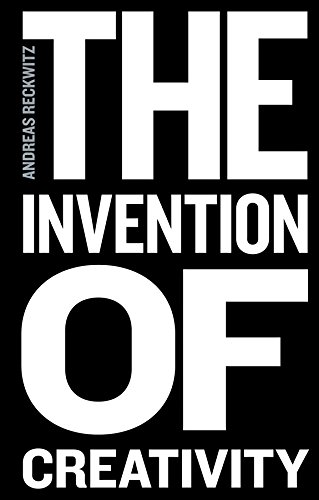

The invention of creativity : modern society and the culture of the new / Andreas Reckwitz ; translated by Steven Black.
Material type: TextPublisher: Malden, MA : Polity, 2017Description: x, 310 pages ; 24 cmContent type:
 - text
- unmediated
- volume
- 9780745697031 (hardback)
- 9780745697048 (paperback)
- HD 9999 C9472 R43 2017
| Item type | Current library | Shelving location | Call number | Copy number | Status | Date due | Barcode |
|---|---|---|---|---|---|---|---|
 Book
Book
|
TUP Manila Library | General Circulation Section-GF | HD 9999 C9472 R43 2017 (Browse shelf(Opens below)) | c.1. | Available | P00033108 |
Includes bibliographical references and index.
"Be creative! Contemporary society has seen an unprecedented rise in both the demand and desire to be creative, to bring something new into the world. Once the reserve of artistic subcultures, creativity has now become a universal model for culture. More than that, it has become an imperative. In this new book, cultural sociologist Andreas Reckwitz investigates how the ideal of creativity has grown into a major social force, from the art of the avant-garde and postmodernism to the" ?creative industries?" and the innovation economy, the psychology of creativity and self-growth, the media representation of creative stars and the urban design of" ?creative cities?". Where creativity is often assumed to be a force for good, Reckwitz looks critically at how this imperative has developed from the 1970s to the present day, seeing it not as emancipatory, but rather as a very specific social and cultural phenomenon. Though we may well perceive creativity as the realisation of some natural and innate potential within us, it is far more a product of our surroundings, an attribute we find ourselves systematically admonished to develop and one which we fervently and compulsively desire to possess. The Invention of Creativity is a bold and refreshing counter to conventional wisdom that shows how our age is defined by radical and restrictive processes of social aestheticisation. As such it will be a valuable contribution to those working across disciplines, from cultural and social theory to art history and aesthetics"--
There are no comments on this title.